
Understanding & Overcoming Low Back Pain
What is Low Back Pain?
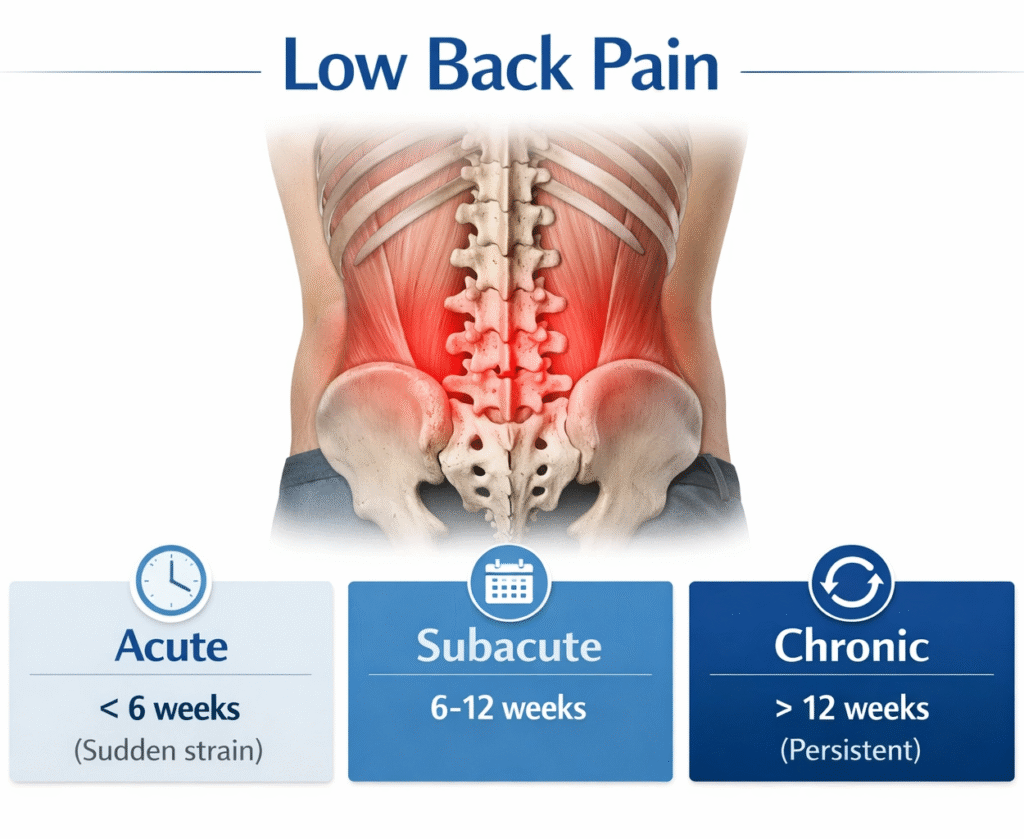
Low back pain refers to discomfort or pain located in the lower portion of the spine, between the bottom of the ribs and the top of the buttocks.
Depending on how long the symptoms last, it can be classified into three types:
Acute Low Back Pain
Lasts for less than 6 weeks. Often occurs due to sudden strain, injury, or improper movement.
Subacute Low Back Pain
Persists between 6 to 12 weeks.
Chronic Low Back Pain
Lasts longer than 12 weeks and may involve multiple contributing factors such as muscle weakness, joint stiffness, or lifestyle factors.
Common Causes of Low Back Pain
The lower back is made up of vertebrae, intervertebral discs, ligaments, muscles, and nerves. Dysfunction in any of these structures can lead to pain.
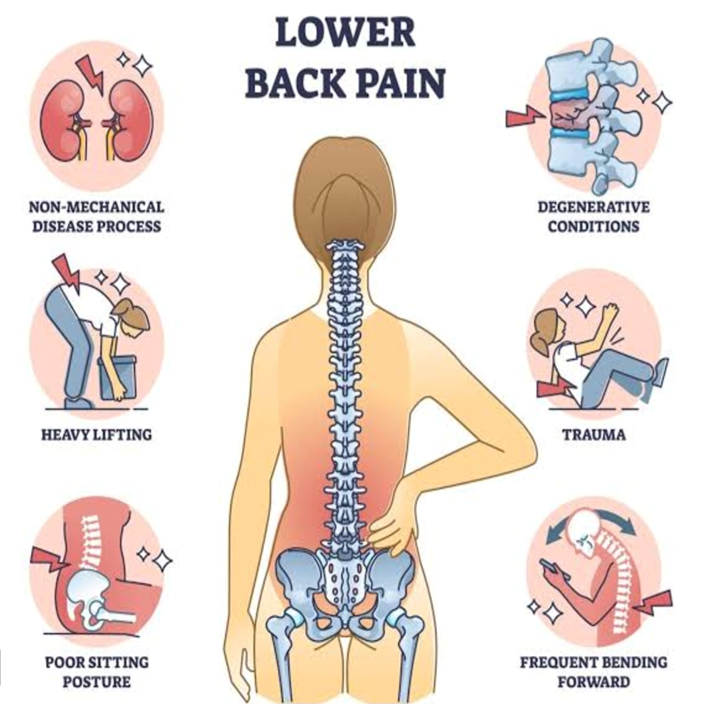
- Musculoskeletal Strain
This is the most common cause of low back pain and may result from:
- Repetitive movements
- Poor posture during sitting or standing
- Lifting heavy objects incorrectly
- Sudden twisting or bending movements
- Age-Related Degeneration
With increasing age, spinal structures undergo natural wear and tear.
Common degenerative conditions include:
- Disc degeneration – reduced hydration and flexibility of spinal discs
- Osteoarthritis – inflammation of spinal joints
- Spinal stenosis – narrowing of the spinal canal that may compress nerves
- Specific Spinal Conditions
Some medical conditions may also cause low back pain, such as:
- Herniated disc
- Spondylolisthesis (vertebral slipping)
- Sacroiliac joint dysfunction
- Scoliosis
- Other Contributing Factors
Low back pain can also be influenced by lifestyle and systemic factors:
- Emotional stress and muscle tension
- Smoking
- Obesity
- Infections or inflammatory diseases (rare but possible)
It is important to note that most cases of low back pain are classified as non-specific, meaning no single structural cause is identified.
Risk Factors for Low Back Pain
Several factors increase the likelihood of developing low back pain:
- Age – Degenerative changes increase with age.
- Sedentary lifestyle – Weak core muscles and tight hip muscles reduce spinal support.
- Poor physical fitness – Lack of strength in abdominal, gluteal, and back muscles.
- Occupational factors – Jobs involving heavy lifting, prolonged sitting, or vibration.
- Smoking – Reduces blood supply to spinal tissues.
- Obesity – Places additional mechanical load on the spine.
- Stress and psychological factors – Anxiety and depression can increase muscle tension and pain sensitivity.
- Previous back injury – Increases the chance of recurrence.
Common Symptoms of Low Back Pain
Symptoms can vary widely among individuals but often include:
- Pain in the lower back region
- Pain that may spread to the buttocks or thighs
- Stiffness and reduced spinal mobility
- Pain during bending, lifting, or prolonged sitting
- Muscle spasms in the back
- Tenderness when touching the lower back
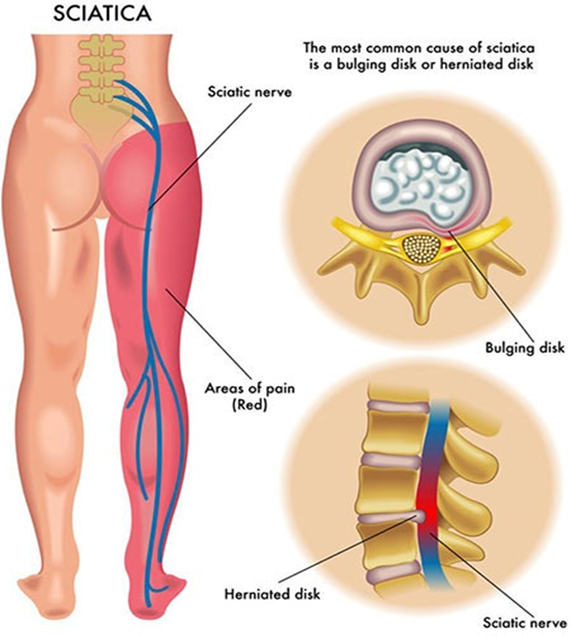
- Radiating pain down the leg (sciatica)
[Sciatica is a condition in which pain radiates along the path of the sciatic nerve, usually from the lower back to the buttock and down the leg.
It commonly occurs due to compression or irritation of a lumbar nerve root, often from a herniated disc or spinal stenosis.
Symptoms include sharp or burning pain, tingling, numbness, or weakness in the affected leg.
Warning Signs That Require Medical Attention
Although most cases are not serious, certain symptoms require immediate medical evaluation:
- Severe and worsening pain
- Sudden numbness or weakness in legs
- Loss of bladder or bowel control
- Pain that does not improve with rest
- Pain associated with fever or unexplained weight loss
- Pain after a major trauma or accident
These may indicate a more serious condition requiring urgent medical care.
Physiotherapy Management of Low Back Pain
Physiotherapy plays a key role in reducing pain, improving mobility, and preventing recurrence.
Comprehensive Assessment
Treatment begins with a detailed evaluation, including:
- Medical and activity history
- Postural assessment
- Range of motion testing
- Muscle strength evaluation
- Neural examination
This helps identify the specific mechanical or functional factors contributing to pain.
Individualized Treatment Plan
Based on assessment findings, the physiotherapist creates a personalized program that may include:
Education
Patients are educated about posture, lifting techniques, ergonomics, and lifestyle changes.
Pain Management
Methods may include:
- Activity modification
- Heat or cold therapy
- Relaxation techniques
Manual Therapy
Hands-on techniques may help improve mobility and reduce pain.
Examples include:
- Joint mobilization
- Soft tissue release
- Muscle relaxation techniques
Exercise Therapy
Exercise is the most important component of long-term recovery.
A physiotherapy exercise program may include:
- Core strengthening
- Exercises targeting the transversus abdominis and multifidus to stabilize the spine.
- Glute and lower limb strengthening
- Strong hip muscles reduce load on the lumbar spine.
- Flexibility exercises
- Stretching tight muscles such as hamstrings and hip flexors.
Low back pain can be frustrating, but most cases improve significantly with the right approach.
A combination of education, movement, strengthening, and lifestyle modification can help you regain control over your pain and return to normal activities.
If you are experiencing persistent back pain, consulting a physiotherapist can help identify the cause and guide you
toward a safe and effective recovery plan.