
When the Bladder Loses Control: A Physiotherapist’s Guide to Urinary Incontinence

Have you ever experienced a sudden leakage of urine while coughing, sneezing, laughing, or exercising?
Or felt a strong urge to urinate but couldn’t reach the restroom in time?
If yes, you are not alone. Many people silently experience these symptoms but often hesitate to talk about them. This condition is known as urinary incontinence.
It affects people of different ages, especially women, older adults, and individuals after certain medical conditions. But with right awareness and physiotherapy interventions, urinary incontinence can often be managed or even prevented.
WHAT IS URINARY INCONTINENCE?
Urinary incontinence is the involuntary leakage of urine that is a person losing its control over their bladder. It occurs when the muscles and nerves that help control urination do not work properly. Urinary incontinence is common worldwide and can significantly affect quality of life, emotional well-being, and daily activities.
Types of Urinary Incontinence
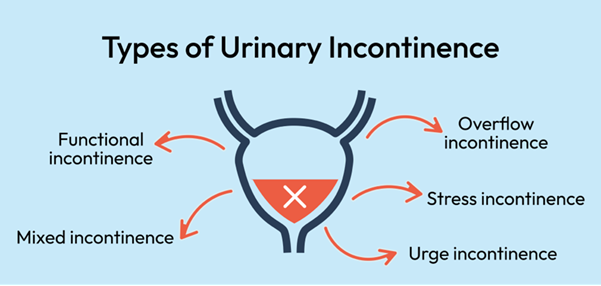
There are several types of urinary incontinence, but the most common include:
- Stress Incontinence: Leakage of urine during activities that increase pressure on the bladder such as coughing, sneezing, laughing, or lifting heavy objects.
- Urge Incontinence: A sudden, strong urge to urinate followed by involuntary leakage.
- Mixed Incontinence: A combination of both stress and urge incontinence.
From a physiotherapist perspective, many cases are related to weak pelvic floor muscles, poor bladder habits, or reduced muscular control.
Common Symptoms of Urinary Incontinence
People with urinary incontinence may experience a variety of symptoms, including:
- Leakage of urine during coughing, sneezing, laughing, or exercising
- Sudden and strong urge to urinate that is difficult to control
- Frequent urination (more than usual)
- Waking up multiple times at night to urinate
- Feeling unable to completely empty the bladder
- Avoiding physical or social activities due to fear of leakage
These symptoms may start gradually and can worsen if not addressed early.
Management and Prevention of Urinary incontinence
Pelvic Floor Muscle Training (PFMT)
Pelvic floor muscle training is the most commonly recommended intervention for urinary incontinence. These exercises strengthen the muscles that support the bladder and urethra, helping to improve bladder control. Regular practice of pelvic floor contractions improves muscle strength, endurance, and coordination, which reduces episodes of urine leakage during activities such as coughing, sneezing, or lifting.
Bladder Training
Bladder training focuses on improving bladder control by gradually increasing the time between urination. Patients follow a scheduled voiding pattern and learn techniques to control the urge to urinate. Over time, this helps increase bladder capacity and reduces urinary urgency and frequency.
Biofeedback and Electrical Stimulation
Biofeedback may be used to help individuals identify and correctly contract their pelvic floor muscles. It provides visual or auditory feedback that improves muscle awareness and exercise performance. In cases where pelvic floor muscles are very weak, electrical stimulation can be used to activate the muscles and support strengthening.
Lifestyle Modifications
Lifestyle changes are also an important part of management. Maintaining a healthy weight, managing constipation, reducing caffeine intake, and following proper fluid habits can reduce pressure on the bladder and pelvic floor. Education on correct breathing and avoiding excessive straining during physical activities can also help control symptoms.
Summary
Urinary incontinence is a common but manageable condition. With appropriate physiotherapy interventions such as pelvic floor muscle training, bladder training, and lifestyle modifications, many individuals can significantly improve their bladder control and quality of life. If you are experiencing symptoms of urinary incontinence, seeking professional guidance can help you receive the right treatment and support. For personalized assessment and physiotherapy management, feel free to refer to our clinic for expert care and guidance.